
What You Need To Know About Bow-Mounted GPS Motors

Wind, current, and boat movement constantly work against kayak anglers. You line up a perfect cast, only to drift away from the structure before the lure reaches the strike zone. If you make small adjustments, they interrupt your rhythm and force you to reposition repeatedly.
Bow-mounted GPS motors anchor you in place without the constant work, holding your position, locking your angle, and managing drift so you’re not fighting the water.
Here’s what you need to know about bow-mounted GPS motors to help you decide whether this system fits your fishing style.
How Bow-Mounted GPS Motors Work
The motor mounts at the bow and runs off a battery system, using GPS to continuously track your position and make small thrust adjustments that counteract wind and current. Most systems also let you store routes or follow a path at a consistent speed, which is useful for methodically working shoreline structure, weed edges, and flats.
Spot Lock: The Feature That Changes Everything
Spot Lock takes positioning a step further by holding you within a tight radius of a single chosen point. Activate it, and the motor automatically corrects every time wind or current pushes you off target. That precision lets you thoroughly pick apart a piece of structure without drifting away between casts and keeps your hands free when a fish is on the line.
When a GPS Motor Makes the Biggest Difference
Bow-mounted motors don’t benefit every situation equally. Anglers notice the biggest difference when conditions introduce unpredictable movement. In those moments, the motor becomes less of a convenience and more of a tool for consistency.
Situations where GPS motors shine include:
- Windy lakes where positioning changes constantly
- Tidal rivers with steady current movement
- Offshore structure, like humps or reefs
- Fishing vertically over deep water
- Targeting a specific piece of submerged structure
Each of these environments requires accurate boat positioning. The motor removes the need to paddle or adjust your orientation.

Installation Details for Kayaks
Adding a bow-mounted GPS motor requires planning. Kayaks don’t offer the same mounting space as traditional fishing boats, so balance and placement matter.
Weight distribution becomes the first factor. Mounting the motor at the bow shifts the kayak’s center of gravity forward, which affects tracking and stability.
Battery placement also matters. Most anglers place the battery toward the center or rear of the kayak to maintain balance.
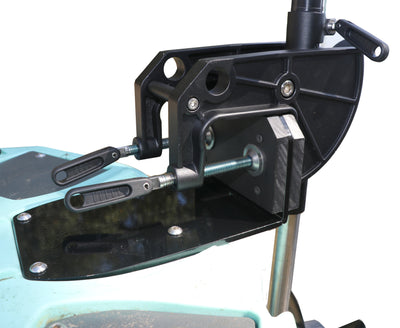
Mounting brackets designed for kayak use simplify the process. These brackets allow secure installation without compromising the hull.
Many anglers use kayaks for fishing with setups that keep the deck clear and organized. Clean rigging prevents tangles and allows quick access to rods, tackle, and electronics.
Power and Battery Management
Every motor depends on a reliable battery system. Understanding power requirements helps prevent frustrating situations on the water.
Most kayak anglers use lithium batteries because they provide strong output while keeping weight manageable. Traditional marine batteries work, but they add significant weight to smaller watercraft.
Battery size determines how long the motor runs. Longer fishing days require higher amp-hour capacity. You should also consider charging habits. Reliable charging routines keep the motor ready for early morning launches or multi-day trips.
Proper power management keeps the motor performing consistently when you need it most.
Steering and Control Options
Modern bow-mounted GPS motors provide multiple control methods. Each option allows anglers to operate the system without interrupting their fishing rhythm.
Remote controls remain the most common solution. A handheld remote lets you easily adjust speed, direction, and GPS functions.
Foot steering systems provide another option for anglers who prefer hands-free control. With a foot pedal, you maintain rod control while steering the kayak.
Many motors now pair with smartphone apps, unlocking more advanced controls like route planning, waypoint management, and motor diagnostics. But whether you're managing settings from your phone or adjusting on the water, the goal is the same: stay in control without losing focus on fishing.
Balance Technology With Simplicity
Technology improves fishing, but complexity can also slow anglers down. A smart kayak setup keeps things simple.
GPS motors should support your fishing approach rather than dominate it. The best systems integrate cleanly with your deck layout and remain easy to operate. That means organizing wiring carefully and avoiding unnecessary gear clutter. Clean layouts help you move confidently around the kayak.
Many experienced anglers prefer a minimal setup that blends propulsion, navigation, and storage without overcrowding the boat. When everything works together smoothly, the entire fishing experience improves.

Stability and Platform Design Still Matter
Even the best GPS motor won’t fix an unstable platform. Stability remains the foundation of effective kayak fishing.
A well-designed kayak allows anglers to move comfortably, manage gear, and control the boat in changing conditions. Stable platforms also make motor installations safer and more predictable.
Design features like wide hull shapes and thoughtful deck layouts help support motor systems. They also allow anglers to stand, reposition, and cast confidently.
Kaku Kayak built its reputation around stability and ease of use, creating platforms that help anglers manage gear and movement without unnecessary complexity. When your kayak already provides a predictable platform, adding a GPS motor expands what you can accomplish on the water.
Important Personal Considerations
Before installing a system, you should consider how the motor fits your fishing style. Think about the environment you fish in most often. Windy lakes and large reservoirs benefit heavily from GPS positioning, while small ponds may not require it.
Also, evaluate how often you reposition while fishing. If you constantly adjust your location, the motor will likely provide immediate value.
Finally, consider how much gear you already run. Electronics, batteries, and mounts should complement your setup and not overcrowd the kayak. Understanding these factors helps you decide whether the upgrade improves your time on the water.
Control Creates Better Fishing
Kayak fishing demands awareness, positioning, and efficient movement. Small adjustments in boat control can dramatically improve your ability to target structure and present lures effectively.
Learning the fundamentals of bow-mounted GPS motors helps anglers understand how positioning technology changes the experience. The right setup allows you to hold location, manage wind and current, and focus entirely on fishing.
A stable kayak design plays a major role in making these systems work effectively. Platforms that prioritize balance and usability create the foundation for successful motor integration.
If you’re looking for a kayak platform built around stability, thoughtful layout, and real fishing performance, take a closer look at what Kaku Kayak offers. A well-designed kayak paired with smart positioning technology can completely change how efficiently you fish.