
The Impact of Drive Systems on Kayak Design and Hull Shape

Have you ever visited an outdoor shop and been surprised by the sheer variety of plastic boats on the wall? Some look like sleek darts, while others resemble floating barges with lawn chairs attached. It gets confusing fast. You just want to get on the water without flipping over or exhausting yourself in the first twenty minutes.
The secret to understanding these differences lies in how you power the vessel. We’ll explore the impact of drive systems on kayak design and hull shape. By the end, you’ll know why boats look the way they do and which fits your style.
The Evolution of Propulsion Needs
For years, the physical reach needed for double-bladed paddling has limited kayak design. To allow for an efficient manual stroke, boats had to be narrow and sit low in the water. This traditional focus on speed and agility often resulted in less stability for the user.
However, the introduction of pedal drives and electric motors has completely transformed hull engineering. Because mechanical propulsion removes the need for wide arm clearance, modern kayaks can now be wider and more stable for fishing.
Width and Stability
One of the most immediate changes introduced by mechanical drives is the increased width of the boat. Unlike traditional paddlers, who need a narrow beam for a proper stroke cadence, this restriction doesn't affect pedal-driven kayakers.
Designers took full advantage of this freedom by pushing the sidewalls out to create exceptional primary stability. As a result, many modern kayaks feel more like a stable platform or dock than a traditional boat, allowing you to stand up and fish without feeling tippy.

The Flat Transom
The rise of motorized propulsion has significantly influenced the design of modern kayak sterns. While a pointed stern is ideal for cutting through water and creating a clean wake, it performs poorly when mounting an electric motor.
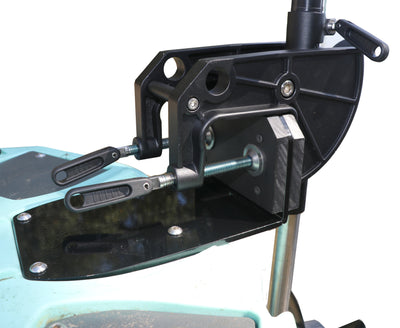
Designers flattened the kayak's back to create a transom to address the issue. This squared-off design provides a secure mounting point for trolling motors or power poles. It also resists twisting forces from the motor and ensures straighter tracking under power.
Accommodations for the Drive System
Pedal systems require a hole in the boat's floor to allow the drive unit to reach the water. While this may seem counterintuitive, it is a necessary design feature. This hole, known as the "drive well," creates a structural weak point in the plastic, forcing manufacturers to reinforce and bulk up the surrounding area.
Additionally, the hull design must account for this opening by diverting water smoothly around it to minimize drag and noise.
Pontoons and Tunnel Hulls
One of the most stable designs is the tunnel hull, which mimics the shape of a catamaran or pontoon boat. By placing buoyancy on the outside edges of the boat, this design offers incredible resistance to tipping. It’s perfect for fishing kayaks, which must support the weight of batteries, tackle crates, and anglers standing up to cast.
The Keel and Draft Depth
Boat draft refers to the least amount of water needed to keep it afloat. Essential components like propellers and fins hang below the hull, effectively increasing this depth. To protect these expensive drive units, many hull designs feature deeper keels.
These molded plastic ridges act as a built-in bumper, where the keel absorbs the impact first to safeguard the propeller. Beyond protection, a deep keel also improves performance by helping the boat track straight, even in windy conditions.
Rudder System Integration
If you're not using a paddle to steer, you'll need a rudder. Modern kayaks are designed with this in mind. They have molded channels for steering cables and a special recess in the stern for the rudder blade. This design makes the steering system feel like a natural part of the boat. It also keeps the internal lines from snagging and protects them from UV damage.

Seat Position and Cockpit Depth
In traditional paddle kayaks, you sit low in a narrow boat to control the center of gravity for stability. However, the introduction of wider, drive-compatible hulls provided more stability, allowing higher seating. This shift led to the introduction of frame seats, which look and feel like lawn chairs.
To make room for your legs to move, the cockpit floor was lowered. This design feels more open—like sitting in a chair—rather than the cramped feeling of sitting inside a tube like a traditional kayak.
Weight Distribution and Volume
Mechanical drives and batteries can add significant weight to a kayak. A hull designed for paddling might end up sitting too low in the water with all that extra gear.
Designers increased boat volume, which typically involves creating a thicker, taller hull. The added material provides more buoyancy, allowing the kayak to handle the weight of the drive system and operator without sacrificing performance.
Bow Shape and Water Entry
Paddle kayaks need a sharp front to move through the water easily with less effort. Motorized kayaks can have a rounder front because the motor gives more power.
A fuller bow adds more storage space to the hatch. It also lifts the boat over waves instead of slicing through them, which keeps you drier in rough water. You trade a bit of speed for a more comfortable and practical ride.
Hybrid Designs for Versatility
Some users want the flexibility to paddle and pedal, which has driven the creation of hybrid hull designs. These boats aim to strike a balance, being narrow enough for efficient paddling while wide enough to accommodate a drive system.
Typically, the hull includes a removable pod for the drive system. When the pod is removed, the floor becomes flush. This design offers versatility, giving you the best of both worlds, though it comes with some minor trade-offs in functionality.
Choose Your Ride
Ultimately, the impact of kayak drive systems on their design and hull shape affects performance on the water. It determines where you can travel and how much gear you can bring along. If you crave speed and silence, the narrow lines of a paddle kayak fit best. If you want utility and hands-free operation, the wider, stable platform of a pedal or motor kayak wins out.
Kaku Kayak offers a range of vessels that balance stability and efficiency. Our lineup includes designs that allow you to stand, paddle, or motor with ease. Visit our website to find the perfect boat for you!